
Our Work
Why Conserve Pumas?
The puma (also known as mountain lion or cougar) is a keystone species. This means that pumas have a very large effect on their ecosystems! Without them, we run the risk of other wildlife populations growing unchecked. This imbalance in the ecosystem can lead to the loss of native species.
Continued urban expansion can put ecosystems at risk. Humans need a place to live, but our natural world is what makes that place worth living in. If we don't make the effort to learn about our ecosystem - even the species that might make us nervous - we're going to lose it. While the media often paints a villainous story about pumas, it is possible to live peacefully with them. We can build a world where we live in harmony with pumas and preserve our local ecosystem.
Our Conservation Goals
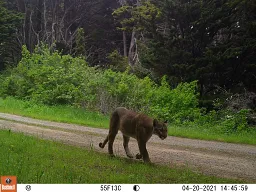
The Bay Area Puma Project's primary goal is to create a world where humans and pumas live together peacefully. We're doing this by increasing the locals’ knowledge through evidence-based research. By improving awareness about pumas, we can decrease conflict and improve co-existence.
Not only will this help preserve local ecosystems, it will also help people feel more comfortable in their homes. Bay Area residents will be able to adventure in their local nature without fear. Instead, they will see the natural world through a lens of awe, with a deeper understanding of what's at play around them.
The Impact Of Research
Our research methods are highly innovative and non-invasive. We maintain a camera trap network across the Bay Area and also study puma genetics via their scat (feces) and diet via their hair. Because our efforts are so hands-off, we've been able to track pumas better than ever before. We're truly seeing their natural movements and patterns.
With a better understanding of local pumas' natural behaviors, we can better educate communities on living near them. With ongoing community engagement, we have seen a decrease in conflicts. Instead, we see locals advocating for pumas and living without fear of their natural neighbors.

The Bay Area Puma Project is organized and funded by the Felidae Conservation Fund.
The Felidae Fund is an international organization dedicated to the preservation of wild cats. They set the standard on community education and research about wild cats.
The Bay Area Puma Project Story
BAPP was born in 2007 when the Felidae Conservation Fund leaders saw a specific need in the Bay Area and they partnered with UCSC and CDFW. This quickly growing metro was seeing an increasing number of puma sightings. The media was quick to spin the narrative and turn the cats into villains. While this has permanently stained the reputation of pumas, we believe there is hope to correct the story, and replace it with evidence-based knowledge.
Since our inception, we have worked hard to improve relations with pumas throughout California and the Americas. Our conservation efforts have impacted thousands and allowed for local residents to feel confident in their homes and nature. Not to mention our research has revolutionized the way we see pumas. But they are not out of danger... Humans remain the pumas' biggest threat.
Our Multifaceted Approach
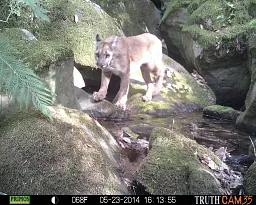
BAPP's program addresses these conflicts with a complementary set of initiatives.
Research
- collect data on puma movements, biology, ecology and behavior
- analyze data and develop conclusions about local puma populations
- develop documents that support conservation and contribute to scientific knowledge
Education
- inform local residents, reduce tensions, increase understanding
- give students deeper appreciation for local ecosystems
- connect people to nature using the latest technologies
Conservation
- secure protection for critical linkages
- secure protection for priority habitats
- minimize human-puma encounters through better land use policies
The scientific insight and public support that BAPP generates will help reduce tensions, increase understanding, and influence communities to protect key habitats and corridors.
Recent News & Updates
Eyes in the Wild: The AI Revolution in Conservation Science

Wildlife researchers today can collect ecological data at scales that were unimaginable a decade ago.
A dazed tiger, a medical mystery, and a lesson in wildlife health
In March 2018, something unusual happened near the outskirts of Thimphu, the capital city of Bhutan. Photos emerged of a large male tiger wandering in broad daylight, unconcerned...
Bhutan’s Secret Cats: New Jungle Cat Discovery at Nearly 4,000 Meters
Most people only hear about the larger, well-known big cats like snow leopards in the high Himalayas or Bengal tigers in subtropical forests. These charismatic species often...
Recent News & Updates
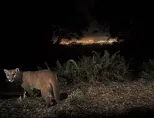
Exploring the Influence of Artificial Light Pollution on Carnivore Behavior
General
April 07, 2026A growing body of research is examining how human activity alters when animals are active.
Avian Flu at the Urban Edge: Risks to Wild Cats and Human Health
General
April 06, 2026Avian flu (also known as bird flu or H5N1) is back in the headlines, and increasingly close to...
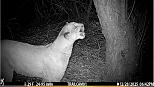
The flawed logic behind Utah’s mountain lion culling study
General
February 18, 2026When it comes to wildlife management, few topics generate more debate than predator control to support big game...