
Outdoor House cats and the Invisible Threat of Zoonotic Disease
- Author: Olivia Jensen
- Publication Date: October 29, 2026
- Related Projects: Bay Area Puma Project, Bay Area Bobcat Project, Wild Cat Health Project, Living with Lions
- Focus Species: Lynx rufus (Bobcat) , Puma concolor (Mountain Lion)
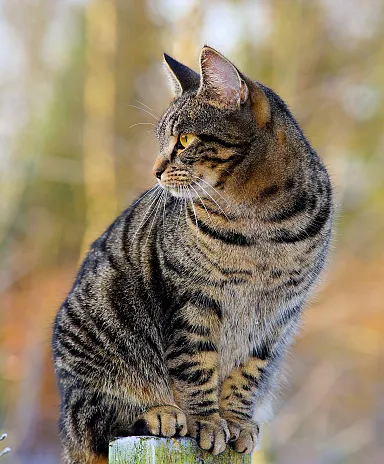
Humans have shared their homes and lives with cats since the time of ancient Egypt, but today's environment presents risks that our feline companions aren't equipped to navigate on their own. Letting domestic cats roam freely outdoors is a deeply ingrained habit for many owners, yet growing scientific evidence points to a compelling reason to reconsider: outdoor access dramatically increases a cat's risk of contracting and spreading preventable zoonotic diseases.
The physical hazards facing free-roaming cats are well known - traffic, fights with other animals, parasites like fleas and ticks, and accidental poisoning from rodenticides or toxic plants like lilies (1). Yet beyond these immediate physical dangers lies an invisible threat many pet owners overlook: microscopic pathogens that pass between animals and humans.
Zoonotic diseases, or zoonoses, are infectious conditions capable of jumping species barriers. The global impact of zoonotic spillover was made starkly evident by SARS-CoV-2, the virus responsible for COVID-19, which originated in bats (2). Its predecessor, SARS-CoV, spilled over to humans through civets (2), a clear reminder of how vital it is to monitor disease dynamics across mammalian species. As part of the Wild Cat Health Project, the Felidae Conservation Fund tracks zoonotic pathogens in wild felids like bobcats and mountain lions by analyzing scat samples, shedding light on disease.
Domestic cats contract zoonotic bacteria, viruses, and parasites primarily through contact with infected wildlife - most often rodents and their bodily fluids (3). Common zoonoses carried by cats include Toxoplasma gondii (toxoplasmosis), feline roundworms, and leptospirosis. Because free-roaming cats naturally hunt and explore rodent habitats, their chances of encountering these pathogens skyrocket.
A recent global study evaluated pathogen prevalence among three groups: feral cats, owned outdoor cats receiving regular veterinary care, and strictly indoor cats. Researchers initially expected feral cats to carry the heaviest pathogen loads due to their lack of medical care and reliance on hunting for survival. Fecal analysis, however, revealed a surprising result: owned outdoor cats harbored a pathogen burden nearly identical to that of feral cats (3). Most strikingly, cats with outdoor access were three to five times more likely to carry zoonotic pathogens than indoor-only pets. Routine veterinary checkups, while essential, cannot shield an outdoor cat from daily environmental exposure. Preventing unsupervised roaming remains the single most effective way to eliminate this risk.
While walking a cat on a leash might still draw a few double-takes from neighbors, it represents one of the best ways to offer outdoor enrichment safely. On a leash, owners control what their cat sniffs, licks, or touches, keeping them at a safe distance from wild rodents and contaminated soil. Research confirms that supervised, leashed outings carry a significantly lower risk of pathogen exposure compared to free roaming (3). As an added benefit, leashed walks provide physical exercise and mental stimulation for both cat and owner, helping curb stress-related behavioral issues (4) while keeping pets safe from traffic and toxins.
Cats may possess instincts shaped over thousands of years, but modern ecosystems present challenges their ancestors never faced. Just as the Wild Cat Health Project works to uncover disease patterns in wild populations, protecting domestic cats from preventable infections is a vital component of broader ecosystem and public health. Even well-fed pets with regular vet checkups can unknowingly bring harmful pathogens into the home. Keeping cats indoors or exploring the outdoors together on a leash (4) is one of the simplest, most impactful steps owners can take to protect their pets, their families, and local wildlife.
References
1. Tan, S.M., Stellato, A.C. and Niel, L., 2020. Uncontrolled outdoor access for cats: An assessment of risks and benefits. Animals, 10(2), p.258.
2. Hao, Y.J., Wang, Y.L., Wang, M.Y., Zhou, L., Shi, J.Y., Cao, J.M. and Wang, D.P., 2022. The origins of COVID‐19 pandemic: A brief overview. Transboundary and emerging diseases, 69(6), pp.3181-3197.
3. Wilson, A.G., Wilson, S., Marra, P.P. and Lapen, D.R., 2026. Outdoor roaming of owned cats elevates risk of zoonotic pathogen exposure: A global synthesis. Plos Pathogens, 22(4), p.e1014160.
4. Elford, A., Cooke, A.S. and Ventura, B.A., 2025. “I want them to live their best lives:” A qualitative exploration of owner experiences with walking their cats. Animal Welfare, 34, p.e56.
Do You Have 2-4 Hours A Month To Preserve Your Local Ecosystem?
Our volunteers are the driving force behind making true change in ecosystem health and wild cat conservation. Some like to volunteer in the field, others help us maintain our online presence, and some work with events. With just a few hours a month, you can make a difference, too.
Make A Difference Right Now
As a 501(c)3 nonprofit, our work is only possible because of generous donors like you.
More than 93% of your donation will go directly to our groundbreaking research, outreach, and education programs.
This is where true change starts. If you’d like to be a part of it, make a donation to Felidae Conservation Fund today:
Or,