

Wild Cat Health Project
Unlocking Ecosystem and Public Health through Non-Invasive Science
Research
Welcome to the Wild Cat Health Project. By studying our region's apex predators, we aren't just protecting wildlife, we are uncovering vital insights into the shared health of our environment, domestic animals, and human communities.
- Focus Species: Lynx rufus (Bobcat) , Puma concolor (Mountain Lion)
- Location: California
- Project Status: Ongoing
- Project Start: 2022
Help us continue to fund projects like this one:
OVERVIEW
Why Wild Cats Matter to Public Health
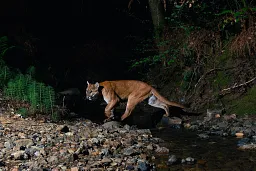
While mountain lions roam vast wilderness territories and bobcats navigate tighter ranges closer to agricultural and suburban edges, both species cross boundaries where wild and human worlds meet. As apex predators, each reflects the health of the entire ecosystem from their distinct vantage points at the top of the food chain.
By tracking wild cat health, we can detect environmental threats before they impact human and domestic animal communities. This is a prime example of One Health - the framework recognizing that human, animal, and environmental health are deeply interconnected. What impacts a mountain lion today can impact public health tomorrow.
Image by Otto Olnes
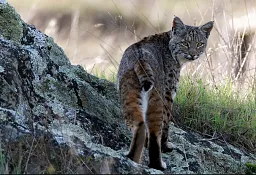
Bobcat Photo Courtesy of Trish Carney.
RESEARCH
The Wild Cat Health Project is a comprehensive 5-year research and conservation initiative that monitors the health of apex predators, specifically bobcats and mountain lions, to safeguard both wildlife and public health.
Utilizing non-invasive fecal surveys, the project collects scat samples to perform advanced genotyping and screen for critical health markers, including environmental toxins, heavy metals, stress induced cortisol levels, and zoonotic pathogens like Toxoplasmosa gondii.
By operating at the intersection of wildlife ecology and public health, this long-term study tracks how landscape fragmentation and environmental pollution impact these native felids, providing actionable data to protect our shared ecosystem.
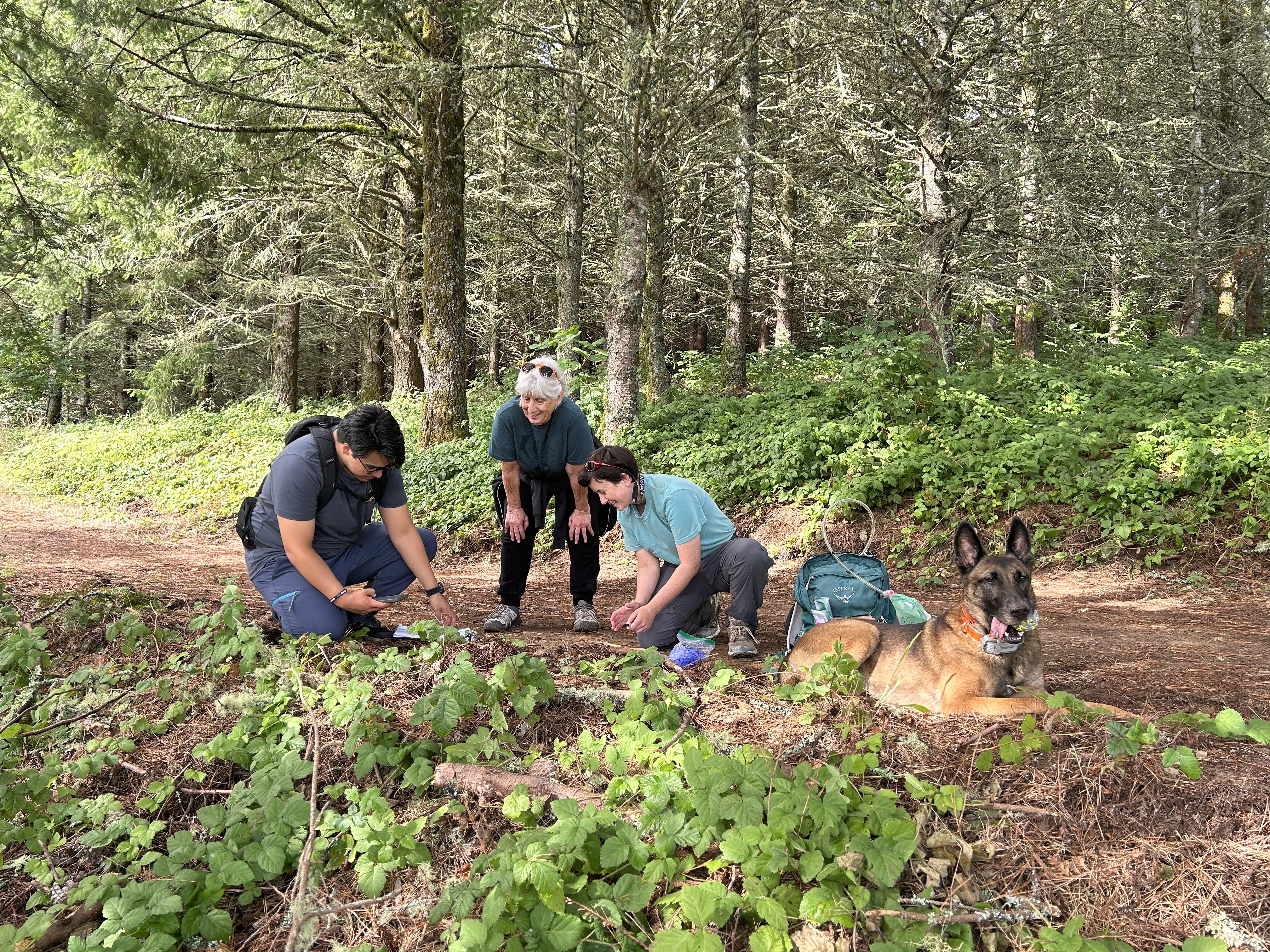
Image by Trish Carney
Our Methodology: The Power of Scat
Our research relies entirely on non-invasive fecal surveys - a highly effective, stress-free approach to wildlife monitoring. Operating across a range of urban-to-wild landscapes in the San Francisco Bay Area and Orange County, our fieldwork captures data at the exact boundaries where human development overlaps with wild felines.
To find these hidden samples across vast public and private lands, our teams partner with specially trained scent detection dogs. These highly specialized canine teams track established trails to locate elusive puma and bobcat scat, allowing us to unlock a vast library of biological data while ensuring the wild cats themselves remain completely undisturbed.
Following these intensive canine field deployments, our teams continue supplemental scat collection year-round to guarantee a continuous stream of data across all seasons.
 What We Test For (And Why It Matters)
Every sample we collect undergoes rigorous laboratory screening to extract four critical layers of data:
- Genotyping (Who are they?): We extract DNA to identify individual cats, determine sex, and map population genetics. This helps us understand how wild cats move through fragmented landscapes and identify critical wildlife corridors.
- Pathogen Screening (What diseases are present?): We screen for zoonotic pathogens, diseases that can jump between wildlife, domestic pets, and humans. A primary target is Toxoplasma gondii (toxoplasmosis) Because all felids (wild and domestic) are the sole definitive hosts capable of shedding this parasite's infectious eggs into the environment, monitoring wild cat scat helps us track how this disease circulates through natural water systems and wild food webs, posing risks to public health and marine life.
- Heavy Metals & Toxins (What is polluting the environment?): Wild cats accidentally ingest environmental contaminants through their food chains. We test scat for mercury, which rides inland on coastal fog layers, settles on vegetation, and accumulates heavily as it moves up from deer to apex predators.
- Cortisol Levels (How stressed are they?): By measuring fecal cortisol (a major stress hormone), we can quantify how human development, habitat fragmentation, and toxic exposure physically impact the chronic stress levels of these animals.
Ecosystem Action: Data for a Safer Community
The data we extract from wild cat scat doesn't just stay in the laboratory, it serves as a critical asset for municipal water districts, public health officials, and environmental resource managers.
By mapping toxoplasmosis and fog-borne mercury pathways across the landscape, our project provides real-world utility:
- Protecting Public Water Quality: Toxoplasma gondii eggs are incredibly resilient and can survive in soil and water for months. Mapping where wild felids are shedding these pathogens allows local water districts to pinpoint vulnerability zones in local watersheds, helping them protect municipal drinking water reservoirs and downstream marine habitats.
- Tracking Atmospheric Pollution: Because mercury rides inland on coastal fog and builds up rapidly in the food chain, our fecal testing provides environmental managers with a powerful tool: a regional pollution map. Tracking mercury levels in apex predators reveals exactly which coastal zones and landscapes are experiencing the highest rates of atmospheric toxin deposition, helping us track the invisible footprint of marine-borne contaminants.
- Guiding Urban & Open Space Management: When local agencies understand where toxic exposure and stress levels are highest, they can make data-driven decisions on where to restrict chemical rodenticides, where to restore habitats, and how to safely manage the borders where human neighborhoods meet wild spaces.
What We are Seeing So Far
Launched in 2024 following a feasibility study, the Wild Cat Health Project is currently in its third year of data collection. While long-term trends take time to map, our early field seasons have already confirmed critical baselines:
- Overlapping Stressors: Felines living near our urban boundaries are facing multiple man-made pressures simultaneously, chronic stress and urban toxins do not occur in isolation.
- Persistent Threats: Even with recent regulatory restrictions, legacy rodenticides and urban pollutants remain highly persistent in local developed food webs.
- The Power of Corridors: Early genetic matching emphasizes just how vital contiguous, unbroken land pathways are to keeping local populations healthy and resilient.
- Our university laboratory partners are currently processing our latest multi-year sample batches, which will give environmental managers an unprecedented map of regional intervention priorities.
How You Can Help
Conservation science thrives on community support. Whether you want to follow our field updates, read our upcoming peer-reviewed publications, or support our laboratory processing costs, you can make a tangible difference.
PROJECT PARTNERS
- California Department of Fish and Wildlife
- DeMatteo LLC
- Rogue Detection Teams
- Oregon State University
- University of South Dakota
- Texas State at Austin
- Fresno Chaffee Zoo
- Conservation Society of California
- CuriOdyssey
References
Weiss-Penzias, P.S., Bank, M.S., Clifford, D.L., Torregrosa, A., Zheng, B., Lin, W. and Wilmers, C.C., 2019. Marine fog inputs appear to increase methylmercury bioaccumulation in a coastal terrestrial food web. Scientific Reports, 9(1), p.17611.
Reyes-Velarde, A. (2019, December 2). Coastal fog linked to mercury poisoning in Mountain Lions, researchers say. Los Angeles Times.
You, Jia. (2014, August 5). Mercury levels in surface ocean have tripled. Science.
Onuselogu, E. (2025, August 8). Climate change could make Chagas more common in the U.S. STAT.