A Genetic Mishap:
Decoding the Cheetah’s DNA
- Author: Naomi PalmaSosa
- Publication Date: August 21, 2026
- Related Project: Tsavo Cheetah Project
- Focus Species: Acinonyx jubatus (Cheetah)
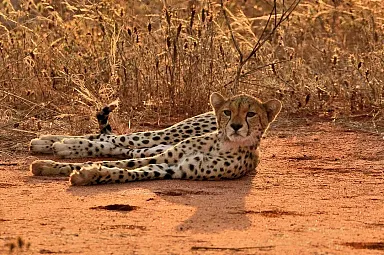
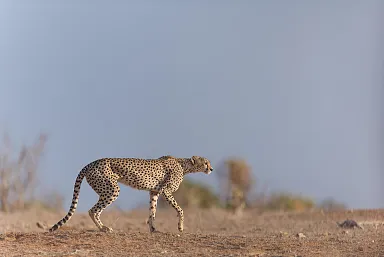
The cheetah (Acinonyx jubatus) is the undisputed speed champion of the land, capable of reaching an astonishing 60 to 65 miles per hour. But behind that instantly recognizable spotted coat and incredible athleticism lies a complicated genetic history, one that poses a unique challenge to modern conservation efforts.
A century ago an estimated 100,000 cheetahs persisted across Africa. Today, that number has plummeted to just 7,000 to 7,500 mature adults. They survive primarily in fragmented pockets of Africa, along with a critically endangered and tiny population in Iran (1). While habitat loss, declining prey, and human-wildlife conflict are driving this decline, the cheetah is fighting a hidden battle on a microscopic level: its own DNA.
Surviving the Bottleneck
Compared to other mammals, cheetahs have startlingly low genetic diversity. In a healthy, robust population, genetic variation is the raw material that allows a species to adapt to changing environments or fend off new diseases (2). For the cheetah, that raw material is in short supply.
Scientists believe the species barely survived two major population bottlenecks. The most significant one occurred at the end of the last ice age, roughly 10,000 to 12,000 years ago. As the global climate shifted, cheetahs vanished from over 75% of their historical range. The population shrank so drastically that the few remaining individuals were forced to interbreed just to keep the species alive. While it saved them from extinction, this extreme bottleneck left a permanent mark. Today's cheetahs are highly genetically similar, and this uniformity has real-world consequences.
The Cost of Low Diversity
Because they are one of the most inbred mammals on the planet, cheetahs face rampant reproduction issues. They suffer from high rates of juvenile mortality and severe sperm abnormalities, resulting in poor-quality semen (3,4). When wild populations become small and isolated by human development, finding a genetically distinct mate becomes nearly impossible.
This lack of variation also makes them incredibly vulnerable to disease. If a virus mutates and one cheetah is susceptible, chances are, the entire population is, too. A tragic example occurred in 1983, when a feline infectious peritonitis (FIP) outbreak at an Oregon zoo wiped out 60% of the facility’s cheetahs. That mortality rate is exponentially higher than it would be for other felid species, simply because the cheetahs lacked the genetic armor to fight the virus off (5).
What This Means for Conservation
So, how do we protect a species that is already genetically compromised?
Modern conservation has to address both the human-related threats of today and the genetic baggage of the past. First and foremost, maintaining large, connected landscapes is critical. Cheetahs need vast, unbroken territories to hunt and to seek out unrelated mates.
At the same time, biologists are using genetic data to carefully manage captive populations. Both in situ (wild) protection and ex situ (captive) management play essential, complementary roles in the species’ long-term survival (6).
Programs like the Association of Zoos and Aquariums (AZA) Cheetah Species Survival Plan rely on these genetic records to act as wildlife matchmakers. By tracking lineage, experts can select breeding pairs from different facilities to maximize genetic diversity and keep captive populations healthy. These managed environments also allow researchers to study fertility issues and find ways to reduce cub mortality, which historically has been up to 40% higher in cheetahs than in other felid species (7).
Captive cheetahs also provide an opportunity for research. Captive individuals allow researchers to study cheetah fertility and identify ways to reduce cub mortality (8), which has previously been found to be up to 40% greater than in other species (7).
However, captive breeding is just one piece of the puzzle. It is a complementary tool—not a replacement for protecting cheetahs in the wild. Realizing a future for wild cheetahs requires applied research, habitat restoration, and working directly with the communities that share the land with these predators. As Durant et al. (9) point out, cheetah conservation is deeply intertwined with human expansion, economics, and local education.
On the Ground in Kenya
Understanding how cheetahs navigate human-dominated landscapes is the only way to help their populations adapt.
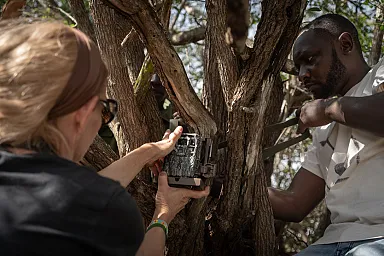
Felidae Conservation Fund’s Tsavo Cheetah Project is working on the ground in Kenya, one of the species’ last remaining strongholds. The team studies how cheetahs move through the unprotected, shared lands bordering Tsavo National Park. By focusing heavily on community engagement, the project works alongside local residents to prevent human-wildlife conflict, protect livestock, and foster environmental stewardship.
To learn more about how we are protecting this iconic cat, visit the Tsavo Cheetah Project. https://felidaefund.org/projects/research/tsavo-cheetah-project
References
- Johnson, W. 2026. Cheetah. Encyclopedia Britannica. https://www.britannica.com/animal/cheetah-mammal
- Thompson, SE.1998. "Cheetahs in a bottleneck". Built for Speed: The Extraordinary, Enigmatic Cheetah. Minneapolis: Lerner Publications Co. pp. 61–75. ISBN 978-0-8225-2854-8.
- Dobrynin, P., et al. 2015. Genomic legacy of the African cheetah, Acinonyx jubatus. Genome biology, 16, 277.
- Terrell, KA, et al. 2016. Continued decline in genetic diversity among wild cheetahs (Acinonyx jubatus) without further loss of semen quality. Biological Conservation, 200: 192-199.
- Heeney, JL, et al. 1990. Prevalence and implications of feline coronavirus infections of captive and free-ranging cheetahs (Acinonyx jubatus). Journal of virology, 64(5), 1964–1972. https://doi.org/10.1128/JVI.64.5.1964-1972.1990
- Marker, et al. (2018). “History of Cheetahs in Zoos and Demographic Trends Through Managed Captive Breeding Programs.” In Marker, L.; Boast, L. K. & Schmidt-Kuentzel, A. (eds.). Cheetahs: Biology and Conservation (pp.309–321). London: Academic Press.
- O'Brien, S. et al. (2017). Conservation genetics of the cheetah: lessons learned and new opportunities. Journal of Heredity. 108: 671–677.
- Smithsonian's National Zoo and Conservation Biology Institute. (n.d.). Cheetah breeding program. https://nationalzoo.si.edu/conservation/cheetah-breeding-program
- Durant, S. et al. 2018. "The conservation status of the Cheetah". In Marker, L., et al. (eds.). Cheetahs: Biology and Conservation (pp. 533-572). London: Academic Press.
Do You Have 2-4 Hours A Month To Preserve Your Local Ecosystem?
Our volunteers are the driving force behind making true change in ecosystem health and wild cat conservation. Some like to volunteer in the field, others help us maintain our online presence, and some work with events. With just a few hours a month, you can make a difference, too.
Make A Difference Right Now
As a 501(c)3 nonprofit, our work is only possible because of generous donors like you.
More than 93% of your donation will go directly to our groundbreaking research, outreach, and education programs.
This is where true change starts. If you’d like to be a part of it, make a donation to Felidae Conservation Fund today:
Or,