
Human, Dog and Wildlife Intersections:
Emerging Threats to Bhutan’s Felids
Non-native plants and animals that damage natural ecosystems are known as invasive species, and no part of the world is free from their impact. Invasive species cost billions of dollars each year as they spread disease, disrupt agriculture, threaten human health and outcompete native species for space and resources. Many are introduced, intentionally or inadvertently, through global trade, travel, and human settlement. Well-known examples include zebra mussels hitchhiking on contaminated boats in the Great Lakes and rats that have decimated seabird colonies on Pacific islands. Even domestic cats, often cited for their impacts on songbirds, are part of this global challenge (1).
But what about domestic dogs, our oldest and most trusted companions?
Dogs are the most widespread carnivore on earth, with an estimated global population between 700 million and one billion (2,3). Up to 75% are free-ranging, which includes unrestrained pets, working herding or guard dogs, semi-owned strays that receive some human support, and fully feral dogs that avoid people altogether (3,4). In many regions, free-ranging dogs are now the most abundant carnivore in or near protected areas (4). While beloved for companionship and protection, dogs pose significant risks when they roam, including harassing wildlife and transmitting diseases among humans, livestock, and wildlife (5,6).
A Public Health Concern
Dogs carry between 40 and 60 zoonotic diseases that can be transmitted to humans through bites, feces, or even close contact (2,7,8). This includes rabies, brucellosis, sepsis, scabies, roundworm, and hookworm (9,10). Each year, dogs are responsible for millions of bites worldwide. In many low-income regions, where access to medical care, vaccines, or community education may be limited, rabid dog bites lead to an estimated 60,000 human deaths annually and impose an economic toll of nearly 8.6 billion USD (11).
Free-ranging dogs also affect daily life and tourism. They can restrict access to roads and shops, deter hikers from trails, scare away wildlife, or create loud disturbances around villages (7,12).
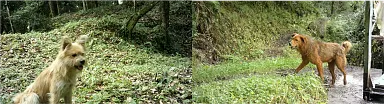
A Growing Threat to Wildlife
Dog impacts on wildlife are not well understood, but the evidence to date is concerning. Several studies have shown that free-roaming dogs threaten wildlife through predation, harassment, competition, and disease transmission (e.g., 5, 6). This can reduce wildlife abundance and force species to alter their habitat use. For example, free-roaming dogs can displace pumas (13) and bobcats (14) and may also compete with or prey on smaller wild cats (15,16).
Disease transmission is an especially serious risk. Large cats that prey on infected dogs can contract rabies, canine distemper virus (CDV), or sarcoptic mange. This has been documented in several felid species, including jaguars (17) and tigers (18). In Nepal, several Bengal tigers died after contracting CDV from dogs (19). CDV attacks the nervous system and infected tigers showed multiple symptoms, including disorientation, seizures, loss of fear of humans, and difficulty walking. This shows how quickly dog-origin pathogens can potentially jump into an apex predator population and potentially tip it toward collapse.
As global dog populations grow and wild habitats shrink, risks of outbreak grow. Outbreaks can sweep through carnivore communities, leaving ecological ripple effects and social consequences for nearby human communities. As human development pushes further into wildlands, these disease pathways become frequent, especially in urban-edge environments where dogs, livestock, people, and wildlife interact.
Why Solutions Are Complicated
A mix of approaches is required to manage free-ranging dogs, including public education, leash laws, registration, sterilization and vaccination campaigns, improved waste management, and barriers preventing dogs from entering protected areas.
A look at Bhutan’s challenge
Bhutan is a good example of how complicated free-ranging dog issues can become. This small Himalayan nation was closed to tourism until 1974, avoiding some of the negative ecological impacts of tourism elsewhere in Asia. Independent travel has been permitted since 2022 and by 2024 tourism had grown by roughly 40%. With more travelers moving freely through towns, monasteries, and forests, the risks of human-dog-wildlife interactions have grown.
Bhutan is nearly 70% forested, with a constitutional mandate to maintain at least 60% forest cover. Yet many villages and settlements sit at the forest edge, where even small expansions (roads, lodges, visitor services) can bring free-ranging dogs into closer contact with wildlife. These dogs often roam widely between settlements and protected areas, creating challenges for conservation and public health.
Bhutan has already taken steps to reduce the risks from free-ranging dogs. The country’s national Catch-Neuter-Vaccinate-Release (CNVR) program has sterilized over 60,000 dogs, most of them free-ranging, and vaccinated 95% against rabies (20). These efforts reduce dog numbers and lower human health risks, but don’t fully resolve dog-wildlife conflict.
As tourism grows, wild cats are more likely to encounter dogs, with unknown behavioral and health consequences (6, 21). But the impacts remain poorly understood in Bhutan.
Conservation begins with collecting data to understand where these animals live, how they use their habitat, and what threats they face. But most wild cats are solitary, elusive, and notoriously difficult to study. That’s where Felidae’s Bhutan Wild Cat Health Project comes in. This is a One-Health initiative using camera traps and scat surveys to explore how humans and free-roaming domestic dogs may be affecting Bhutan’s nine wild cat species. Combined with community education and existing dog management efforts, our findings will help design effective conservation action plans to protect Bhutan’s wild cats.
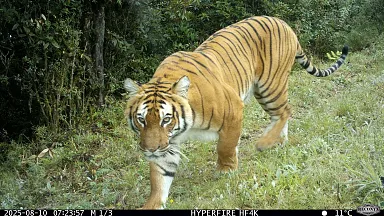
To learn more about the Felidae Conservation Fund’s Bhutan Wild Cat Health Project, visit https://felidaefund.org/projects/research/bhutan-wild-cat-health-project.
References
(1) Loss, SR, et al. (2022). Review and synthesis of the global literature on domestic cat impacts on wildlife. Journal of Animal Ecology, 91(7), pp.1361-1372.
(2) Gompper, M.E. (2014). The dog-human-wildlife interface: assessing the scope of the problem. In M. E. Gompper (Ed.), Free-ranging dogs and wildlife conservation (pp. 9-54) Oxford University Press.
(3) Smith, L.M. et al. (2019). The effectiveness of dog population management: a systematic review. Animals (Basel), 22 (12), 1020.
(4) Hughes, J., & Macdonald, D. W. (2013). A review of the interactions between free-roaming domestic dogs and wildlife. Biological Conservation, 157, 341–351.
(5) Young, J.K., et al. (2011). Is Wildlife Going to the Dogs? Impacts of Feral and Free-roaming Dogs on Wildlife Populations. BioScience, 61(2).
(6) Bryce, C. M. (2021). Dogs as pets and pests: Global patterns of canine abundance, activity, and health. Integrative and Comparative Biology, 61(1), 154-165.
(7) Bergman, D. L., et al. (2009). Dogs gone wild: Feral dog damage in the United States. In J. Boulanger (Ed.), The Thirteenth Wildlife Damage Management Conference (pp. 177-183). Saratoga Springs, NY: Thirteenth WDM Conference.
(8) Julien, D.A., et al. (2021). Unleashing the literature: a scoping review of canine zoonotic and vectorborne disease research in Canis familiaris in North America. Animal Health Research Reviews, 22(1), 26-39.
(9) Knobel, D.L., et al. (2014). Dogs, disease, and wildlife. In M. E. Gompper (Ed.), Free-ranging dogs and wildlife conservation (pp. 144-169). Oxford University Press.
(10) Ghasemzadeh, I., & Namazi, S. H. (2015). Review of bacterial and viral zoonotic infections transmitted by dogs. Journal of Medicine and Life, 8(4), 1.
(11) Hampson, K.L. et al. (2015). Estimating the global burden of endemic canine rabies. PLoS Neglected Tropical Disease, 9(4), e0003709.
(12) Arluke, A. & Atema, K. (2017). Roaming dogs. In L. Kalof (Ed.), Oxford Handbook of Animal Studies (pp. 1-26). Oxford University Press.
(13) Zapata-Ríos, G. & Branch, L. C. (2016). Altered activity patterns and reduced abundance of native mammals in sites with feral dogs in the high Andes. Biological Conservation, 193, 9-16.
(14) Lenth, B. E., et al. (2008). The effects of dogs on wildlife communities. Natural Areas Journal, 28(3), 218-227.
(15) Namgyel, U., et al. (2024). Occupancy and activity pattern of Asiatic golden cat and terrestrial pheasants in Bhutan’s Phrumsengla National Park. Journal of Wildlife and Biodiversity, 8(4), 329-342.
(16) Pereira, J. A., et al. (2010). Causes of mortality in a Geoffroy’s cat population—a long-term survey using diverse recording methods. European Journal of Wildlife Research, 56(6), 939-942.
(17) Nava, A. F. D., et al. (2008). First evidence of canine distemper in Brazilian free-ranging felids. Ecohealth, 5(4), 513-518.
(18) Gilbert, M., et al. (2014). Estimating the potential impact of canine distemper virus on the Amur tiger population (Panthera tigris altaica) in Russia. Plos one, 9(10), e110811.
(19) Bodgener, J., et al. (2023). Canine distemper virus in tigers (Panthera tigris) and leopards (P. pardus) in Nepal. Pathogens, 12(2), 203.
(20) World Organization for Animal Health. Bhutan achieves sterilization of all the countries free-roaming dogs in under two years. (2023 December, 9).
(21) Choki, K., et al. (2023). Conservation potential of non-protected area for sympatric carnivores in Bhutan. Global Ecology and Conservation, 42, e02392.
Do You Have 2-4 Hours A Month To Preserve Your Local Ecosystem?
Our volunteers are the driving force behind making true change in ecosystem health and wild cat conservation. Some like to volunteer in the field, others help us maintain our online presence, and some work with events. With just a few hours a month, you can make a difference, too.
Make A Difference Right Now
As a 501(c)3 nonprofit, our work is only possible because of generous donors like you.
More than 93% of your donation will go directly to our groundbreaking research, outreach, and education programs.
This is where true change starts. If you’d like to be a part of it, make a donation to Felidae Conservation Fund today:
Or,