Silent Spillover and the Hidden Health Risks in California’s Wild Felids
Wildlife health is influenced by a complex mix of environmental and biological pressures, from habitat fragmentation and reduced prey to exposure to infectious pathogens. For mountain lions and bobcats living at the urban-wildland edge, these pressures often overlap, compounding risks to individual animals and, ultimately, to population stability. One bacterium of growing concern for California’s wild felids is Leptospira. This pathogen infects the kidneys of its host and is shed into the environment through urine, where it can persist in soil and water.
In one of the few studies of leptospirosis in wild felids in California, its prevalence was clear, as 46% of pumas and 28% of bobcats tested positive for leptospirosis (1). This is concerning for several puma populations, including those on the Central Coast and in Southern California. Both are classified as Candidate Endangered species by the California Department of Fish and Wildlife because they have shown signs of inbreeding and reduced genetic diversity. This makes them more vulnerable to disease outbreaks (2), and leptospirosis has already been found to be widespread in southern CA (3). Similar prevalence is expected in other California urban systems.
Although Leptospira infection is rarely fatal in wild felids, it can compromise kidney function and overall health. In mammals, infection may affect multiple organ systems, causing symptoms such as fever, lethargy, weight loss, anemia, and abnormal urination (4). Subclinical infections, those without outward signs, are especially concerning, as impaired kidney or liver function can reduce stamina, hunting efficiency, and reproductive success. Over time, these subtle impacts can disrupt population viability, particularly in already fragmented landscapes.
Because Leptospira is spread through urine, environmental contamination is a significant concern. Heavy rainfall and flooding events can increase pathogen persistence and spread through waterways and soil. As climate change drives more extreme precipitation, the risk of zoonotic disease transmission is expected to rise (5). Increasing urbanization further intensifies this risk, bringing wildlife, domestic animals, and people into closer contact. Humans can be serve as accidental hosts, and in severe cases, leptospirosis can be life-threatening.
Preventing Leptospira in free-ranging wildlife is challenging. The bacterium is common across many mammalian species and circulates continuously throughout ecosystems. Vaccines exist but can only be administered in controlled settings, making population-level prevention in wild felids impractical. This really underscores the importance of monitoring, early detection, and a One-Health approach that recognizes the interconnected health of wildlife, ecosystems, and people.
At Felidae Conservation Fund, our Wild Cat Health Project is working to uncover and address hidden health threats like Leptospira in California’s pumas and bobcats. By combining field-based biological sampling, long-term monitoring, and partnerships with researchers and agencies, we track pathogen exposure alongside stress, toxicant burden, and habitat connectivity. This One Health approach helps us understand how disease, urbanization, and climate pressures intersect, informing conservation strategies that protect wild felids while also safeguarding ecosystem and human health. Through science, community engagement, and data-driven action, we aim to ensure a resilient future for both wildlife and the people who share their landscape.
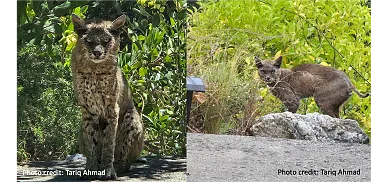
Below: A sick bobcat in the San Francisco Bay Area, CA in the urban-wildland interface.
References
1) Straub, M.H., et al. 2020. Leptospira exposure and infection in free-ranging mountain lions (Puma concolor) and bobcats (Lynx rufus) in California. J Wildl Dis, 56: 120–130.
2) Heard, M.J., et al. 2013. The threat of disease increases as species move toward extinction. Con Biol, 27(6), pp.1378-1388.
3) Haake, D.A and Levett, P.N. 2015. Leptospirosis in Humans. Top. Microbiol. Immunol 387, 65–97.
4) Cornell Wildlife Health Lab. 2025. Leptospirosis. Cornell University College of Veterinary Medicine.
5) Bradley, E.A. and Lockaby, G. 2023. Leptospirosis and the environment: a review and future directions. Pathogens, 12: 1167.
Do You Have 2-4 Hours A Month To Preserve Your Local Ecosystem?
Our volunteers are the driving force behind making true change in ecosystem health and wild cat conservation. Some like to volunteer in the field, others help us maintain our online presence, and some work with events. With just a few hours a month, you can make a difference, too.
Make A Difference Right Now
As a 501(c)3 nonprofit, our work is only possible because of generous donors like you.
More than 93% of your donation will go directly to our groundbreaking research, outreach, and education programs.
This is where true change starts. If you’d like to be a part of it, make a donation to Felidae Conservation Fund today:
Or,